
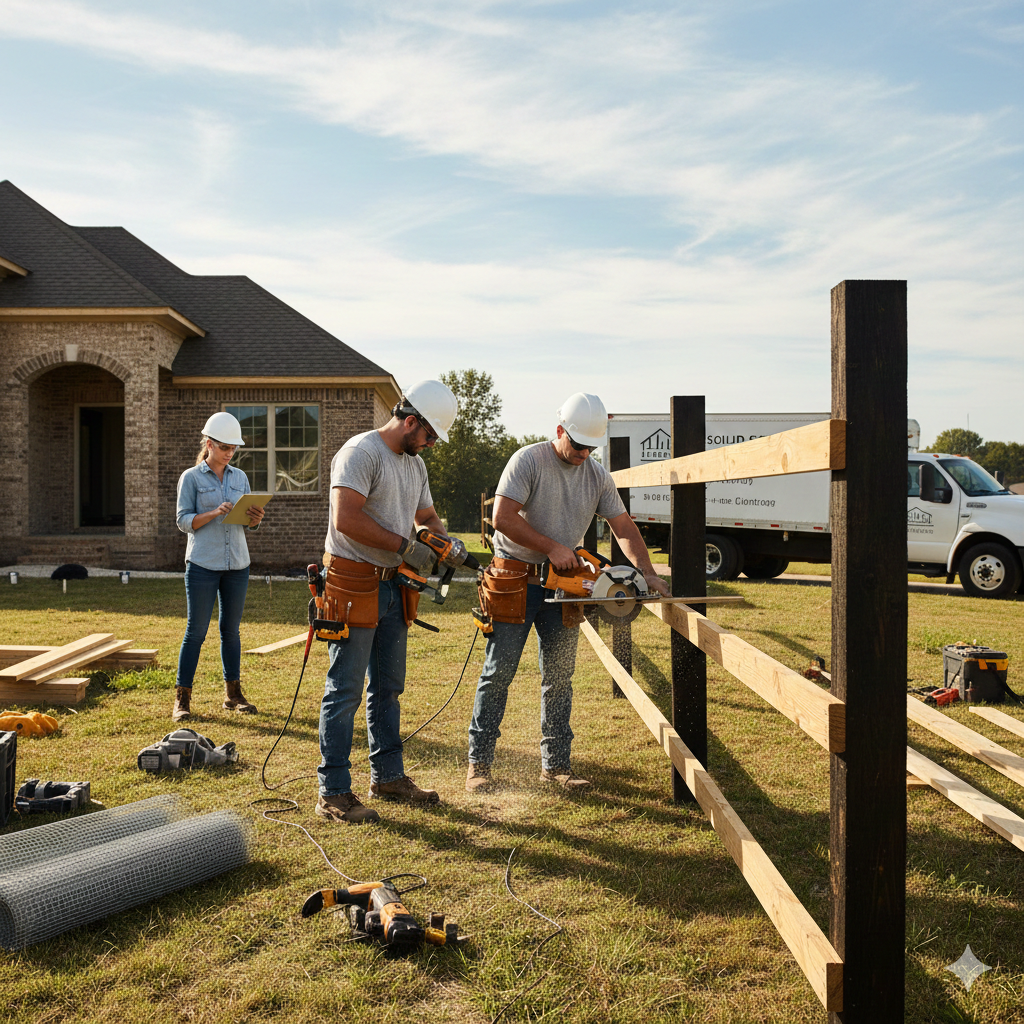
You want a fence that looks right, lasts, and fits your budget, and a skilled contractor delivers that without surprises. A professional fence contractor handles design, permits, material selection, and precise installation so your project finishes on time and performs for years.
Knowing which services matter and how to vet contractors saves time and money, and helps you avoid common pitfalls like poor materials or shaky warranties. This article walks through the key services contractors offer and practical tips for choosing the right pro, so you can move forward confidently with your fence project.
Fence Contractor Services
You’ll learn what fence types contractors install, how a typical installation proceeds from estimate to cleanup, and which materials to expect and why you might choose each.
Types of Fencing Solutions
Fence Contractors commonly offer residential and commercial options: privacy panels for backyard seclusion, picket and ornamental fences for curb appeal, chain-link for budget-friendly security, and agricultural or ranch fencing for livestock control. You can also get specialty solutions such as pool-code safety fencing, pet-friendly barriers, and sound-reducing panels for busy streets.
Choose a style that matches your goals—privacy, security, aesthetics, or code compliance. Contractors often provide custom gates, automation-ready posts for electric gate openers, and short sections for terraces or slope challenges. Ask for examples of past installs in similar settings to judge workmanship.
Installation Process Overview
A typical job starts with a site visit and written estimate showing materials, labor, permits, and timeline. The contractor will mark property lines, locate underground utilities (via calling your local utility notification service), and confirm setbacks and easements before pouring posts or setting anchors.
Post installation follows with precise post placement, level fencing panels or taut chain-link fabric, gate hanging with hardware, and final adjustments for alignment and tension. Expect debris removal, a walk-through to verify hardware and gate operation, and disposal of old fencing if you contracted removal.
Materials Offered
Wood: common species include cedar and pressure-treated pine; wood gives a natural look but needs staining or sealing every few years.
Vinyl (PVC): low-maintenance, resists rot and insects, available in privacy and picket styles; color options are limited but you won’t need to paint.
Metal: aluminum and steel offer durability; aluminum resists rust and suits ornamental designs, while galvanized or powder-coated steel provides higher security.
Chain-link: cost-effective for large perimeters; can be upgraded with privacy slats or vinyl coating.
Composite: blends wood fibers and recycled plastic for lower maintenance than wood with a wood-like appearance.
Compare warranties, expected maintenance, and lifecycle cost when you decide. Ask the contractor for samples and written care recommendations for the specific product lines they install.
Choosing the Right Fence Contractor
Focus on contractors who demonstrate clear experience with your fence material, provide verifiable references and written estimates, and understand local rules that affect placement and permits.
Essential Qualities to Look For
Look for a contractor who specializes in the material you want—wood, vinyl, aluminum, or chain-link—and who can show recent photos of completed jobs with similar scope and terrain. Verify responsiveness: they should return calls within 24–48 hours and provide a written estimate within a few days of the site visit. Check workmanship details: ask about post-setting depth, concrete use, board spacing, and corrosion-resistant fasteners. Request a written warranty that specifies labor and material coverage and the exact duration. Confirm project management skills: get a clear timeline, daily work hours, cleanup plan, and a single point of contact. Ask for an on-site supervisor name and how change orders are handled.
Licensing and Certifications
Ask for the contractor’s business license number and copies of relevant insurance certificates: general liability and workers’ compensation. Call the insurer to confirm coverage dates and limits. Look for trade certifications from recognized organizations (e.g., fencing associations or manufacturer certification for vinyl/aluminum systems). Certification indicates training on best practices and product-specific installation standards. Verify any required local contractor license or specialty permit for your city or county. Contractors who handle permitting regularly will list typical permit costs and timelines on their written estimate. Keep copies of all documents in your project file and confirm the contractor adds your property as an insured location if required.
Service Area and Local Expertise
Choose a contractor who regularly works in your town or county; they’ll know setback rules, easement issues, and local homeowners’ association standards. Local experience reduces surprises at permit review or inspection. Ask how many projects they complete per month in your area and for references within a 5–10 mile radius. Visit one reference if possible to inspect workmanship up close. Confirm familiarity with local soil and climate: frost depth affects post-setting, and coastal salt exposure influences material and fastener selection. Contractors who adapt techniques to local conditions will propose appropriate materials and foundation details.