
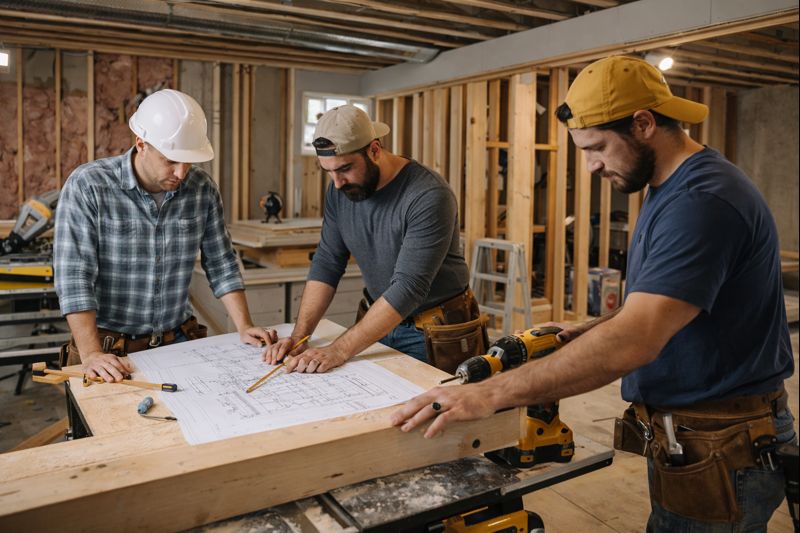
Thinking about a basement renovation London? You can turn unused space into a comfortable living area, rental suite, or high-value family room while meeting Ontario Building Code and local permit requirements. A properly planned basement renovation in London increases usable space and home value while staying compliant and cost-effective when you work with experienced local contractors.
This article walks through the services you’ll need, from design and waterproofing to permits and finishing, and shows how to prioritize choices that boost functionality and resale value. Expect practical guidance to help you evaluate contractors, budgets, and the best ways to get the most from your investment.
Basement Renovation Services in London
You’ll find services that cover design, permitting, waterproofing, and step-by-step construction so your basement becomes usable, safe, and code-compliant. Firms typically offer legal-suite conversion, energy-efficient upgrades, and tenant-ready finishes.
Tailored Design Solutions
You get a design that starts with a site-specific assessment of ceiling height, window wells, existing mechanicals, and access routes. Designers translate that into a layout—bedroom, bathroom, living space, or rental suite—while maximizing natural light and egress.
Expect detailed selections for flooring (engineered hardwood, vinyl plank, or tile), wall assemblies (moisture-resistant drywall, paint systems), and built-in storage. Contractors can prepare 2D plans and 3D renderings so you visualize room flow and furniture placement.
Costs and choices vary by finish level. Ask for sample boards, appliance and fixture schedules, and a scope-of-work document that lists inclusions, exclusions, and warranty terms.
Planning and Regulatory Considerations
You must meet Ontario Building Code and City of London bylaws for ceiling height, insulation, egress, and plumbing. Converting to a legal rental suite requires permits, fire separation details, carbon-monoxide/ smoke detector placement, and often a separate entrance or compliant egress window.
Prepare to submit drawings, specifications, and energy compliance data with your permit application. A qualified contractor or designer can handle permit filings and coordinate inspections to avoid rework.
Budget for permit fees, possible municipal plan review time, and any required upgrades to electrical or HVAC systems to meet current code. Keep a paper trail of approvals and inspection reports for future resale or rental licensing.
Waterproofing Techniques
Start with a thorough condition survey: identify visible damp, efflorescence, hairline cracks, and sump pump status. Interior solutions include exterior-rated vapor barriers, dimple boards, and sealed perimeter drain systems that tie to a sump pump with battery backup.
Exterior options—excavation, membrane application, and re-grading—address chronic seepage but cost more. Contractors often combine approaches: repair structural cracks with epoxy/injection, install French drains, then finish with a raised subfloor or engineered flooring to manage residual moisture.
Specify materials with proven vapor and capillary resistance. Ask for written guarantees on sump pumps and membrane installs, and confirm that any work aligns with local drainage and sewer-surcharge considerations.
Project Timeline and Workflow
A typical basement renovation runs 8–16 weeks from permit approval to final inspection, depending on scope. Initial phases (1–2 weeks) cover demolition and waterproofing; framing, mechanical, and rough-ins follow (2–4 weeks); insulation, drywall, and finishes take another 3–6 weeks.
Use a phased schedule with milestone dates: permit issuance, rough-ins completed, drywall ready, and final inspection. This helps you coordinate trades, deliveries, and temporary relocation of belongings.
Request a written schedule with contingency allowances for weather-delayed waterproofing or material lead times. Insist on regular progress updates and a punch-list walkthrough before final payment to ensure all systems, finishes, and code items are complete.
Maximizing Value with a Basement Renovation
A well-planned basement renovation increases usable square footage, improves energy performance, and can generate rental income when done to code. Focus on durable finishes, proper waterproofing, and systems upgrades to protect your investment and attract buyers or tenants.
Increasing Property Value
Target upgrades that appraisers and buyers notice first: legal egress windows, finished floor area that meets building-code height, and a separate entrance if you plan a suite. Install a bathroom and a kitchenette to convert the space into a self-contained unit; those additions usually yield higher valuation per square foot than decorative finishes alone.
Record permits and inspection reports so future buyers see the work was done to code. Use mid- to high-grade materials in wet areas—ceramic tile, waterproof backer board, and vinyl plank flooring rated for basements—to avoid premature replacement costs. Keep mechanicals accessible and document HVAC, electrical, and radon mitigation work to preserve resale value.
Creating Functional Living Spaces
Decide the primary function before you design: family room, home office, gym, or rental suite each require different layouts and systems. For a rental or in-law suite, plan a separate entrance, independent HVAC zoning, and soundproofing between levels. For a family room, prioritize open sightlines, durable flooring, and recessed LED lighting.
Use built-in storage and multifunctional furniture to keep usable floor space open. Map plumbing and electrical locations early to reduce demolition and retrofit costs. Allocate budget for moisture control—proper insulation, vapor barriers, and perimeter drains—so your finished space remains comfortable and usable year-round.
Energy Efficiency Upgrades
Upgrade insulation to continuous rigid foam on foundation walls and spray-foam or high-R batt in rim joists to reduce heat loss. Seal air leaks at rim joists, penetrations, and window wells; combine weatherstripping with properly installed egress windows to meet code without drafts.
Replace an old furnace or boiler with a high-efficiency model or add a zoned mini‑split for the basement to cut heating costs and improve comfort. Install LED lighting and Energy Star appliances in kitchenettes or laundry areas. Consider a heat-recovery ventilator (HRV) or energy-recovery ventilator (ERV) to maintain fresh air without large energy penalties.